What do you think about the 2016 BMW X5 M and X6 M

The second-generation BMW X5 M and X6 M have officially made their arrival for the speed-obsessed, crossover-loving masses that aren't willing to turn to Mercedes-AMG...

SOME NATURES MOST IMPRESSIVE FIGHTERS: What do you think?

Well every breathing specie on earth has one common character.. FIGHTING!. As we humans quarrel and fight so do animals..

How Safe are unmanned aircrafts(drones) in the air?

A report from the UK's Airprox Board says that the co-pilot of an AT72 flying near London had a near-miss with a quadcopter at its right wing.

WHAT IS REALLY BEHIND THE RANGE ROVER?

I know some readers have not really found time to discover the company behind the range rover we see very frequently on our roads today.

WHAT IS El Niño?

El Niño is the warm phase of the El Niño Southern Oscillation (commonly called ENSO) and is associated....

Friday, 17 October 2014

TOYOTA TO RECALL ITS VEHICLES

"Toyota will recall about 423,000 Lexus models to fix potential fuel leak that could cause a fire"

Toyota Motor Corp. will recall about 1.7 million vehicles globally, including 423,000 of its high-end Lexus models in the U.S. to fix a potential fuel leak that could cause a fire.

Wednesday, 15 October 2014

BRAIN TEASER

Ever thought about this? Which pedal is mostly used(marched on) when operating an automatic car?


  • (a)   Brake
  • (b)  Accelerator
Drop your answers in the comment box..lets see your answers...

Tuesday, 14 October 2014

YEAR 2025: AUTO PILOT ON TRUCKS!!!!!!

As technology is advancing everyday,every brand is striving to be unique from its competitors..
mercedes benz truck by 2025
  Mercedes-Benz has unveiled an autonomous lorry that will be able to drive itself across Europe's roads within the next 10 years.
"In 10 years trucks will be able to drive autonomously on the motorways and highways of Europe," claimed a statement from Mercedes-Benz, after revealing the Future Truck 2025, developed by the company's Daimler Trucks department.
The prototype lorry is designed to reduce emissions, increase road safety and create a connected network of haulage vehicles.
"The Mercedes-Benz Future Truck 2025 constitutes a revolution in efficiency and safety, a revolution for road traffic and its infrastructure, for professional driving and for the road transport sector," said a statement from the German automotive company.
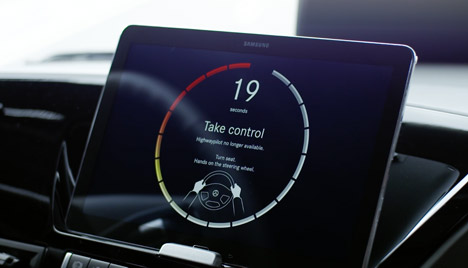
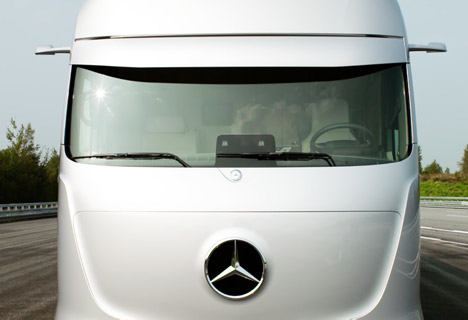
The curvaceous chassis of the cab is covered in LEDs rather than traditional headlights, while cameras are mounted on side wings instead of mirrors, making the design more aerodynamic.Radar sensors and camera technology allow the truck to drive autonomously, creating a Highway Pilot system similar to the autopilot function used by aircraft.
Sensors positioned all around the truck register both moving and stationary objects in the vicinity to form a three-dimensional map of the surroundings.Using this information, the steering is automatically controlled to keep the vehicle in the centre of the lane and fuel consumption is kept at a minimum as the truck self-navigates different topographies.
A feature named Blind Spot Assist employs radar sensors to monitor the sides of the truck and alert the driver to the presence of other road users that may not be immediately visible.The truck also has the ability to connect with other vehicles on the road, increasing the awareness of their speed and proximity to help prevent collisions, but doesn't require this information to drive autonomously.
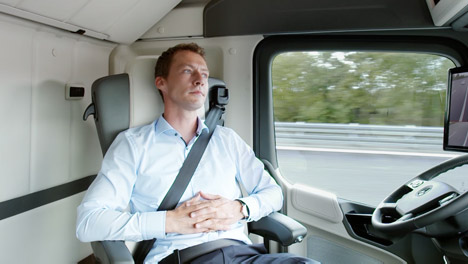
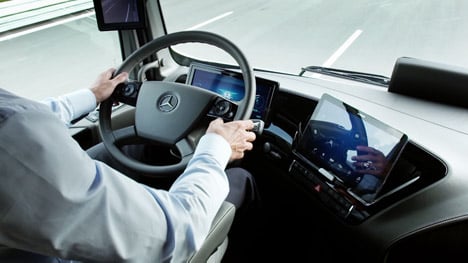
The design still features a driver's cab with a steering wheel, but instruments and switches are replaced with touch-screen displays.The driver's seat can be swivelled 45 degrees to allow the operator to perform other tasks while the vehicle is driving itself, including processing data or communicating with family and friends during long trips.
Daimler Trucks demonstrated the vehicle's autonomous driving capabilities at up to 80 kilometres per hour on a section of motorway in Germany in July.
The truck was unveiled as a prototype at the 65th International Motor Show for commercial vehicles in Hanover, Germany, last month. Its features will now be developed and refined over the next few years to make the vehicles safe for the roads within a decade."The challenge now is to leverage this momentum and to continue our open dialogue with all parties involved, so that in 10 years' time the autonomously driving truck will indeed have become an accepted feature on our roads," said Wolfgang Bernhard, head of Diamler Trucks.The announcement follows the reveal of Google's self-driving car in March, while last week, Priestmangoode unveiled trains for the London Underground that could become the network's first driverless vehicles when introduced in 2020.

MID-2015 WILL GRACE THE LAUNCH OF HYUNDAI's ix25 IN INDIA

logo
The Hyundai Motor Company  is a South Korean multinational automotive manufacturer headquartered in Seoul, South Korea. The company was founded in 1967 and, along with its 32.8% owned subsidiary, Kia Motors, together comprise the Hyundai Motor Group, which is the world's fifth largest automaker based on annual vehicle sales in 2012.Hyundai is currently the fourth largest vehicle manufacturer in the world. Hyundai operates the world's largest integrated automobile manufacturing facility in Ulsan, South Korea, which has an annual production capacity of 1.6 million units. The company employs about 75,000 people worldwide. Hyundai vehicles are sold in 193 countries through some 6,000 dealerships and showrooms.


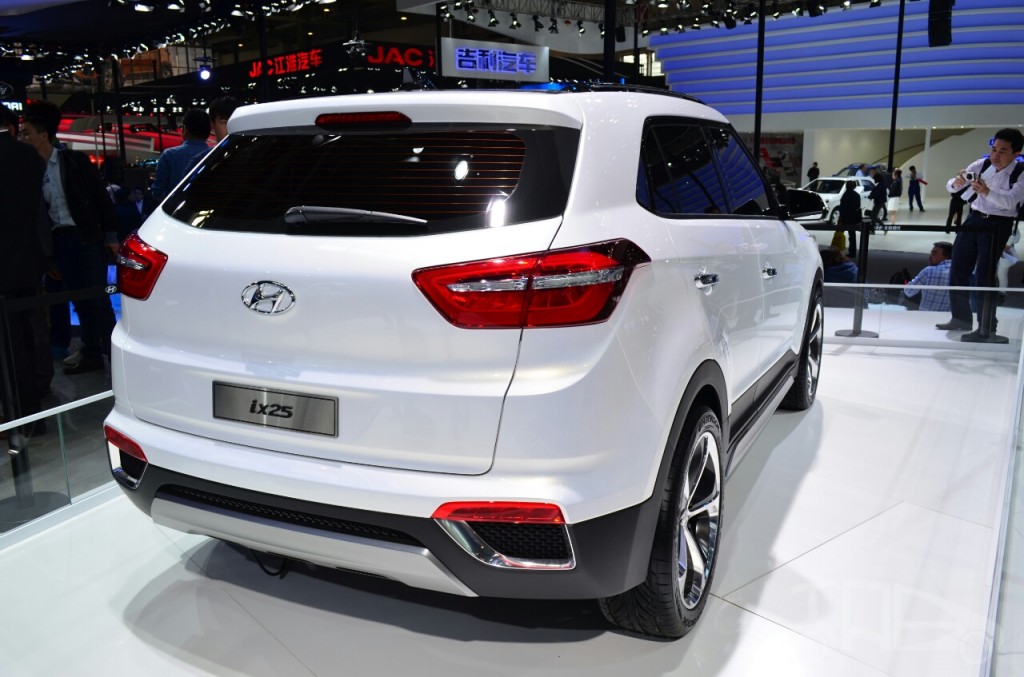
back view

Hyundai’s much anticipated compact SUV, ix25 is likely to make India debut by mid-2015. Compact SUV segment has gained immense popularity in India, many new entrants are expected to soon make their debut in the compact SUV segment. The SUV has already been launched in China recently at 119,800 yuan equivalent to Rs 11.96 lakh. In India, the SUV is expected to be priced between Rs 7.50 lakh to Rs 11 lakh. Spied a number of times undergoing test rounds in India, the SUV is expected to take design cues from iX35 and Santa Fe, the SUV will adorn Fluidic Sculpture Design 2.0. The compact SUV will measure 4270mm long, 1780 mm wide, 1630 high and will possess wheelbase of 2590mm.
front view
On the feature front, equipments such as projector head lights, LED daytime running lights, alloy wheels, fog lamps and a three-slat chrome grille in the from exquisite to the high end trims. Range topping variant is likely to get two-slat front grille.
Hyundai will launch ix25 in both petrol and diesel engine options, power is likely to come from a 1.4 litre, VTVT petrol engine that is good for 106 Bhp of top power along with 135 Nm of peak torque. Expected mileage delivered by petrol motor stands at 17 kmpl. Diesel range of the compact SUV is likely to house a 1.6 litre, CRDi diesel engine that belts out maximum power of 126 Bhp and pinnacle torque of 260 Nm. Diesel variant of ix25 is expected to return 22 kmpl of fuel economy. In its segment, the vehicle will gun straight against Ford EcoSport, Renault Duster and Nissan Terrano.
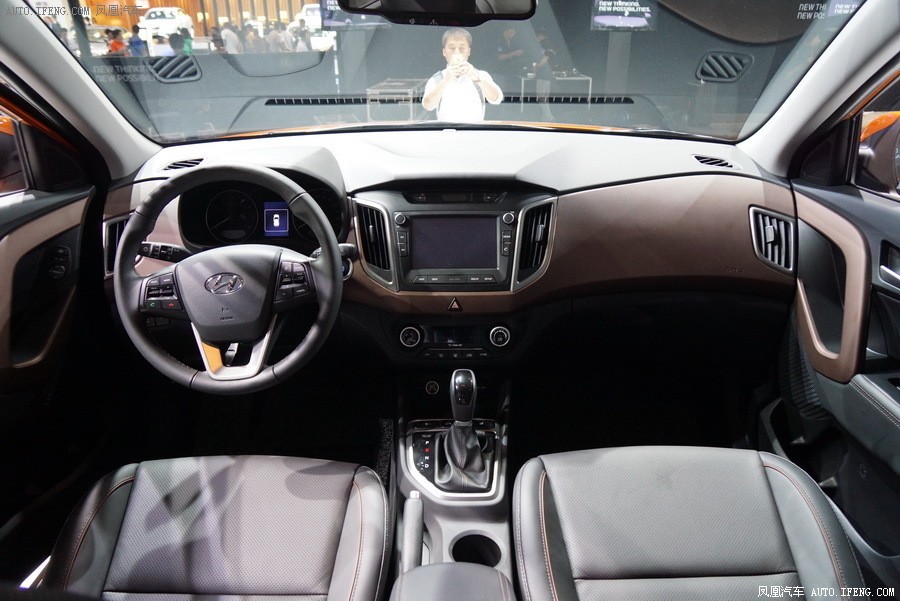
interior

Thursday, 9 October 2014

HTC ON POINT AGAIN WITH HER NEW "SELFIE" CAMERA

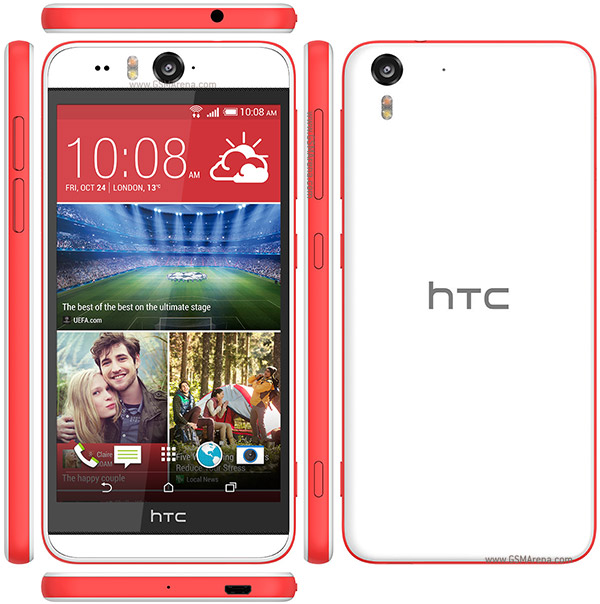
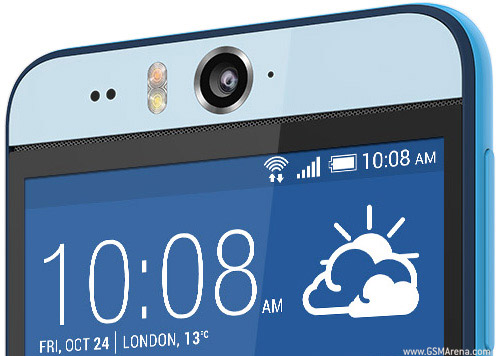
All them ladies that love "selfie" shots i guess this is for you!!!.THE DESIRE EYE as the company calls it,was launched recently by HTC at the Double Exposure event, While the device doesn't set out to reinvent the wheel, it does offer a pleasant experience and the full power of HTC's latest software platform, Eye Experience.
 The camera technology is a big selling point for HTC right now. As CEO Peter Chou stated during his introductory speech, "This is the beginning of the remaining of HTC." While the Desire Eye does incorporate some nifty features, it's no guarantee that it can be the saving grace the company needs. From its insistence on reinvention, it's clear HTC has seen the writing on the wall—that it's currently being oversold by its competition—and it's banking on its latest crop of devices to pull it out of trouble. But is the Desire Eye the hero HTC needs?
The HTC Desire Eye has a 13-megapixel camera and dual LED flash above the screen where the phone’s speaker normally sits. It is the highest resolution front-facing camera fitted to a smartphonecomplete with auto-focus and 1080p video recording.“It’s a smart move by HTC to introduce the Desire Eye, given the consumer frenzy around selfie pictures,” said Ben Wood, chief of research at CCS Insight. “The company has undoubtedly beaten others to the punch with this design and rivals will watch closely to see whether it is a capability that appeals to consumers.”The 5.2-inch full HD 1080p screen is nestled inside a fairly lightweight sturdy body. The unibody chassis is comprised of two contrasting pieces of plastic (which means the Desire Eye is unlikely to have its own Bendgate). If you're prone to dropping your phone in sinks—or heaven forbid, toilets—then you'll be pleased to know that it's IPx7 resistant, which means it can survive if submerged into a meter of water for up to thirty minutes.!!!

The phone will come with Android paired with HTC's own custom Sense UI, and it's powered by a Qualcomm Snapdragon 800 2.3 Ghz quad-core CPU. The Desire Eye boasts only 16GB of onboard memory but the microSD card slot can support up to 128GB more. It's also NFC capable with a handful of sensors that can detect proximity and ambient light, and an accelerometer. The 2,400 mAh battery promises up to twenty hours of talk time on 3G and 538 hours of standby time, though you'll have to wait for our full review to see if it lives up to those claims.see the full specification here
The real stars here are the Desire Eye's cameras. Both the front and rear cameras are a whopping 13 megapixels and offer digital image stabilization technology and dual LED flashes. Both operated admirably for a mid-range phone in the event space's relatively dim lighting and the images looked splendid on the device's screen. There was a bit of a delay focusing while using the video camera, though the panoramic functionality worked well.
HTC is taking the selfie situation plaguing our society very seriously. With the most powerful front-facing camera on any smartphone in the history of smartphones, your self-portraits will look pretty good. Additionally, taking a selfie while engaging in cumbersome activities like mountain climbing if you're the sporty type (or eating a slice of pizza if you're like me) will be even easier with the option to forego the shutter button altogether. To snap a selfie when one of your hands is otherwise engaged, all you have to do is boot up the camera and hold the phone still for two seconds.

And to complement those cameras, HTC is offering a new software platform called Eye Experience, which works hand-in-hand with their revamp of Zoe to push the social side of media. Zoe's been around for a while, but it's yet to gain the kind of traction HTC hopes. Time will tell if the Desire Eye gives it the boost it needs, but it doesn't seem likely to catch on anytime soon, even with a planned expansion to Android 4.3 and iOS.
All in all, the Desire Eye is a solid smartphone for those in the market for a new Android device and its cameras are nothing to scoff at. The device will be available from AT&T later this year with a price point that's yet to be established but will hover in the mid-range category...Selfie Ladies this is your idea phone.

REVIEW OF HTC DESIRE EYE


General  2G Network     GSM 850 / 900 / 1800 / 1900 - all versions
                3G Network     HSDPA 850 / 900 / 1900 / 2100 - Asia
                                         HSDPA 850 / 1700 / 1900 / 2100 - AT&T
                                         HSDPA 850 / 900 / 2100 - EMEA
                                         TD-SCDMA 1900 / 2100 - Asia
                 4G Network     LTE 700 / 900 / 1800 / 2100 / 2600 (Bands 1, 3, 7, 8, 28)
                                         TD-LTE 1900 / 2300 / 2500 / 2600 (Bands 38, 39, 40, 41)
                                         LTE 700 / 850 / 1700 / 1900 / 2100
                                          (Bands 2, 4, 5, 17, 29) - AT&T
                                          LTE 800 / 900 / 1800 / 2600
                                          (Bands 3, 7, 8, 20) - EMEA
SIM                       Nano-SIM
Announced           2014, October
Status                   Coming soon. Exp. release 2014, November
Body Dimensions     151.7 x 73.8 x 8.5 mm (5.97 x 2.91 x 0.33 in)
Weight                154 g (5.43 oz)
          
IPX7 certified - dust proof and water resistant up to 1 meter and 30 minutes
Display Type        Capacitive touchscreen, 16M colors
Size                      1080 x 1920 pixels, 5.2 inches (~424 ppi pixel density)
Multitouch     Yes
                       - HTC Sense 6 UI
Sound               Alert types     Vibration, MP3, WAV ringtones
Loudspeaker     Yes, with stereo speakers, built-in amplifiers
3.5mm jack        Yes
MemoryCard slot       microSD, up to 128 GB
Internal            16 GB, 2 GB RAM
Data GPRS     Yes
EDGE             Yes
Speed             HSDPA 42 Mbps (21 Mbps - AT&T), HSUPA; LTE, Cat4, 50 Mbps UL, 150 Mbps DL
WLAN             Wi-Fi 802.11 a/b/g/n, dual-band, Wi-Fi Direct, DLNA, Wi-Fi hotspot
Bluetooth     v4.0, A2DP, apt-X
NFC             Yes
USB             microUSB v2.0
Camera     Primary 13 MP, 4128 x 3096 pixels, autofocus, dual-LED (dual tone) flash
Features     Geo-tagging, touch focus, face detection, panorama, HDR
Video             1080p@30fps
Secondary     13 MP, autofocus, dual-LED (dual tone) flash, HDR
Features     OS     Android OS, v4.4.2 (KitKat)
Chipset     Qualcomm Snapdragon 801
CPU             Quad-core 2.3 GHz Krait 400
GPU             Adreno 330
Sensors     Accelerometer, gyro, proximity, compass
Messaging     SMS (threaded view), MMS, Email, Push Email
Browser     HTML5
Radio             TBC
GPS             Yes, with A-GPS, GLONASS

Java             Yes, via Java MIDP emulator
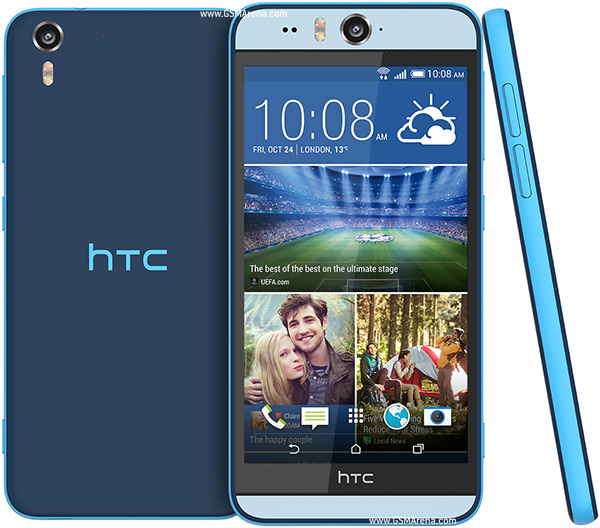
Colors      Blue, Red, White
              - Google Drive (50 GB cloud storage)
              - Active noise cancellation with dedicated mic
              - MP4/H.264/WMV player
              - MP3/eAAC+/WAV/WMA player
              - Document viewer
              - Photo/video editor
              - Voice memo/dial/commands
Battery     Non-removable Li-Ion 2400 mAh battery
Stand-by     (2G) / Up to 538 h (3G)
Talk time     (2G) / Up to 20 h (3G)

Wednesday, 8 October 2014

Spaceships to first induce humans in deep slumber before travelling to Mars!!

Deep Sleep To Get To Mars: Scientists Consider Putting Astronauts Into Torpor, Or 'Deep Sleep,' When Sent To Mars
Scientists are testing ways to induce deep sleep, or torpor, in astronauts who would travel to Mars. Photo courtesy of Shutterstock


Six astronauts lie motionless in a row of compartments with medical monitoring cables connected to their bodies, as their space ship cuts through the silent blackness that separates Earth from Mars.
They’re sound asleep and will be for the extent of their six-month trip, having been placed in an artificially induced state of hibernation called torpor.
This is the way a NASA-funded study sees space explorers traveling to Mars — unconscious, with their metabolism switched into slow motion.
Sending astronauts that far into space would be too challenging, costly and grueling without it, says space engineer John Bradford, whose Atlanta-based company SpaceWorks wrote the study for NASA.
“Ultimately, it’s what we’ll have to do,” he says.
Sci-fi becomes reality
Sleeper spacecraft with crews in suspended animation have been flying through futuristic science fiction movies like “Avatar,” “Alien,” “Pandorum” and “2001: A Space Odyssey” for decades.
Now science reality is catching up, as medical advances have made stasis possible via a method called therapeutic hypothermia.
It has been used since the early 2000s to treat patients with traumatic injuries. Formula One racer Michael Schumacher, for example, who suffered a brain injury while snow skiing, was reportedly put into therapeutic hypothermia.
It renders the patient unconscious by lowering the body temperature. In Schumacher’s case, it also prevented swelling of his brain. The torpor stasis, which greatly slows metabolism, can help injured patients survive longer, while medical teams work to rescue them, Bradford says.
But doctors usually induce it for only three or four days at a time, not the 180 days it would take for astronauts to get to Mars, nor the 180 it would take to get back to Earth.
“It may take some time to get it to the state of effectiveness we want it to go to,” Bradford says.
That involves animal testing, then some extended testing on humans, perhaps on the International Space Station. It could take decades.
A short-cut
There is a possible work-around, though, that astronauts could start out with.
SpaceWork found a Chinese medical study in which trauma patients stayed in torpor for longer periods.
“They had a sample of about 80 people that went through therapeutic hypothermia for all sorts of traumatic injuries. And those periods did range from three to up to 14 days.”
The patients who stayed under for two weeks fared as well as those who were put under for a shorter time.
Two weeks is a time frame SpaceWorks can live with and one that Bradford says his medical partners at the Mayo Clinic and Johns Hopkins University are more comfortable with.
Aboard the spacecraft
Here’s how it would work during space flight.
The two-week torpor periods would be straddled, so that there is always one astronaut who is awake for a brief period.
The colleague currently awake could check in on the other ones who are still unconscious to make sure their intravenous feeding tubes are clear, and urine removal systems and so on are working properly.
He can also communicate with Earth. “He can check emails,” Bradford says.
Then after two or three days, he wakes up the next astronaut by activating a heating system that brings his or her body temperature up to normal.
Then the awakened astronaut straps the other into the hibernation module, hooks up the medical systems and inserts a body cooling tube through a nostril. Heating pads behind the astronaut make sure the nasal tube doesn’t cool down their body too much.
A temperature drop of only about five degrees Fahrenheit is necessary — from 98.6 to about 93 degrees.
Trace amounts of sedatives in the feeding line would suppress the astronaut’s shiver reflex.
The habitat unit housing the sleepers would rotate to create centrifugal force simulating gravity. That would help to mitigate the reduction in bone density that naturally occurs in zero gravity.
How long until this is scenario is reality? Less than 30 years, Bradford thinks.
“I think it’s something that can and will be used on the first mission to Mars.”
Lighter, easier, happier
Getting astronauts to hibernate like bears makes the mission much easier and more affordable, Bradford says.
They can be stacked up in small habitats; with minimal metabolism, they don’t need as much food, no daily change of clothes. Exercise equipment is replaced by electrodes that stimulate their muscles while they’re asleep.
That saves lots of space and altogether more than half the weight of the fully equipped rocket that it would take to transport a crew that was not sleeping through the voyage in torpor.
And it would be more pleasant for the crew.
Astronauts traveling in waking condition would likely arrive in decent physical shape, but “mentally, I’d worry about them,” Bradford says.
“You’re going to be in a pretty tight space — nothing as voluminous as the ISS — for the mission,” he said. Space is dark and feels isolating.
In June 2010, Russia’s space agency simulated a trip to Mars by closing up astronauts in a mock space ship for about a year and a half to see how it affected them psychologically.
They became reclusive, got depressed and slept 12 to 14 hours a day because there was nothing to do, Bradford said.
Ultimate goal?
After six weeks of travel to Mars, the astronauts would face a 500-day mission on the barren planet’s surface, according to SpaceWorks’ assessment.
Then they’d have to endure another 180 days in the cramped rocket to get home to Earth.
Ideally, Bradford would like to see the astronauts complete both travel phases in torpor stasis and not even have to wake up every two weeks.
Therapeutic hypothermia would also allow space agencies to pack more astronauts into one ship. That’s vital to meeting an often-mentioned possible ultimate goal for travel to Mars, he says.
“If we’re looking at colonizing, you’ve to do more than send six or eight people every year.”